Showing posts with label Beaches. Show all posts

Wednesday, April 1, 2015

Dangerous Sea Creatures

Where ever there's beauty, there also lurks danger. No matter where you swim in Yakushima, there are dangers to watch out for: River rapids with recirculating currents, riptides in unregulated beaches, and a myriad of sea creatures. You can minimize the dangers by swimming with others in designated sites, and whether you are snorkeling in open water, splashing around with the kids in a swimming area, or just gazing into the tide pools, there are some creatures which you may be lucky enough to see, but should definitely avoid touching. If you're not sure, look, but don't touch.

Striped Eel Catfish (Gonzui)
Gonzui
By Izuzuki (http://www.izuzuki.com/) [CC BY-SA 3.0 (http://creativecommons.org/licenses/by-sa/3.0)], via Wikimedia Commons
I've put these guys first because they are so common. Schools of little striped fish swimming so tightly together they look like a solid ball often about the size of your head . . . a ball of poisonous spines! Although these are pretty common around the island, I've never had any trouble with them. Just don't try to pet them.

Sea Snakes (Umihebi)
I spotted this guy in Kurio.

These beautiful blue-and-black striped snakes are usually docile. However, I hear that their venom is as deadly as cobra venom!

Cone Snails (Amboina)
Textile cone
By Photographer: Richard Ling (richard@research.canon.com.au) (Location: Cod Hole, Great Barrier Reef, Australia) [GFDL (http://www.gnu.org/copyleft/fdl.html) or CC-BY-SA-3.0 (http://creativecommons.org/licenses/by-sa/3.0/)], via Wikimedia Commons
Shell collectors steer clear of live shells in the cone family. Cones like the textile cone (top) and the geographic cone are infamous for possessing a barb that can stick you with a barb and inject lethal amounts of paralysing venom. Other less famous cones, such as the tulip cone (bottom), should also be avoided.

Lionfish (Minokasago)
Pterois lunulata
By syu-1 (http://photozou.jp/photo/show/1035073/116196386) [CC BY-SA 2.1 jp (http://creativecommons.org/licenses/by-sa/2.1/jp/deed.en)], via Wikimedia Commons
Beautiful from a distance. They are considered an invasive species in the Atlantic, and while one solution to the invasion is to eat them, their spines contain venom.

Portuguese Man-of-War (Katsuo no Eboshi)
Portuguese Man-O-War (Physalia physalis)
See page for author [Public domain], via Wikimedia Commons"><img alt="Portuguese Man-O-War (Physalia physalis)
I think most of us know to avoid waters where jellyfish or man-of-war are floating about. Not just the live ones, but also the tentacles of dead man-of-war washed up on the beach after a storm can sting.


Bottom dwellers:
If you're at a sandy swimming beach, these things aren't so much of a problem, but especially if you're snorkeling, you should watch where you put your feet.
Please, folks, don't stand on the coral. This is inconsiderate of living corals, and also dangerous. In case you're worried about getting tired and needing to stand up while snorkeling, why not put some fins on your feet that will help you with propulsion, or at least some old shoes with cushy soles that will keep your feet afloat?
There's a bunch of nasty things you don't want to stand on, and sharp rocks are just the beginning. While some sea urchins are quite a delicacy, none are pleasant to step on. Not always floating frills and tentacles, jellyfish polyps of the genus Stephanoscyphus may be attached to coral or sponges. What appears to be a placid spot of coral may not be so defenceless. Some things to watch for include sea fansanemones and bristle worms hidden among the coral.


The Yakushima Environment and Cultural Center book, 屋久島の海辺生き物ガイド, also warns about these two curious creatures which I have not been (un)fortunate enough to meet:

Stonefish (Onidaruma Okaze)
Reef0915 - Flickr - NOAA Photo Library
By David Burdick. (NOAA Photo Library: reef0915) [CC BY 2.0 (http://creativecommons.org/licenses/by/2.0) or Public domain], via Wikimedia Commons
I'm not sure if I would spot this fish if it was half a meter from my face, but apparently they have poisonous spines that can be deadly if stepped on.

Blue-Ringed Octopus (HyoumonDago)
Blue-ringed-octopus
David Breneman at en.wikipedia [GFDL (http://www.gnu.org/copyleft/fdl.html), CC-BY-SA-3.0 (http://creativecommons.org/licenses/by-sa/3.0/) or CC BY-SA 2.5-2.0-1.0 (http://creativecommons.org/licenses/by-sa/2.5-2.0-1.0)], from Wikimedia Commons
Beautiful, yes, but their saliva is oh so deadly.

Still want to go swimming? Of course you do! With warm waters and a mix of tropical and cold water fish, Yakushima is a great place to explore the ocean. Just remember, don't touch things if you don't know what they are!


*Copyright note: I've used several images from the Wikimedia Commons. Images without listed copyright information are my own.

Wednesday, February 25, 2015

Swimming Beaches

Okay, February is not the ideal month for a dip in the ocean in Yakushima unless you're either looking for a polar-bear experience or wearing an insulated wet-suit. But today I thought I'd try to warm up by thinking about one of Yakushima's great summer activities: Swimming.

First things first, Yakushima isn't some sandy atoll caressed by gentle tides. The shoreline is mostly rocky and there are some powerful currents in the area. In fact, the island slopes down under the sea so steeply that even marine biologists are amazed that Yakushima can support rich coral reefs, but that doesn't have to spoil your fun: There are three designated swimming beaches in Yakushima where you can splash around in relative safety: On the east coast, there is Haruta Hama in Anbo; on the West Coast there is the sea turtle beach in Kurio; and on the north coast there is the swimming beach in Isso.

Of course, you can enjoy the beaches year round, but during summer vacation days from mid July through the end of August, showers, restrooms, and lifeguards may be found. I believe Kurio's restrooms are open all the time, but you may want a flash light.

Isso

Isso is probably the most lively, offering a roped-off swimming area and a beautiful sandy beach that slopes gently into the ocean. During summer vacation, venders hawk food and snorkel sets on your way from the parking lot, and there are often a few kids trying to kick a soccer ball along the sloping beach. But don't worry: The swimming area is big (and deep) enough that you can easily swim away from the bustle if that's not your style. Perfect after a morning of hiking in Shiratani! Also, if you're in to snorkeling, ask around: The bay on the other side of Yahazu Peninsula -- just a few minutes drive east of the swimming area -- is known for sea life, and -- unlike most coral reefs around Yakushima -- there are not too many big reef rocks to crash into.
A handful of sea glass from the swimming beach in Isso.


Haruta Hama
The swimming hole at Haruta Hama is literally just that: A large pool carved out of the coral rock, with great protection from the waves. The swimming area is plenty big enough to swim laps, and there are two large rock piles kids like to jump off of in the middle. You can also see colorful fish lurking in shade of the rocky walls. The bottom is mostly sand, but during extreme low tides it can be a bit too shallow and salty for a pleasant swim. Bring your shoes so when you're worn out from swimming you can take a stroll along the coastal flats and peer into the tide pools.
I love strolling the expanse of coastal flatlands near Haruta Hama.

Kurio

I have to admit I have never swum at the swimming beach in Kurio because I'd rather explore the nearby coral reefs of Cape Tsusaki that are so beautiful. However, because of currents and rocks, the swimming beach is a safer option if you're looking to relax or take the kids for a swim. It's protected by the same sea walls that protect the neighboring harbor, and the sand beach is usually quiet except for the lull of waves and the occassional fishing boat. Not too many swimmers venture out to this beach, although it is very popular with sea turtles during summer nights.
Reefs and tide pools at low tide at Cape Tsusaki near Kurio. The tides can be rough, so please play it safe.

I'm not going to state the obvious guidelines like don't swim by yourself, and don't swim after drinking alcohol, etc, but I do want to point out two important rules.

1.) Let the sea turtles be. Remember that they bury they're eggs in the sand at night, so don't bother them by going swimming at night, and try not to disturb their nests. And, of course, no fires.

2.) Be aware of dangerous animals. The swimming beaches listed here are safer than outer reefs, but to be on the safe side, don't touch or bother sea snakes, lionfish, striped eel catfish, cone shells (yes, sea shells can kill people), sea urchins, certain corals、fireworms (think underwater caterpillars), stonefish, blue-ringed octopuses, or man-of-war. Actually, you'd better find alternative plans if you've run into a mass of men-of-war. The animals listed here aren't known to attack, but some of them can kill you. (Hope to have a new post on these guys soon! In the meantime, I found this page featuring photos of many of these critters. ) Let's avoid touching anything we are unsure of!


Tuesday, October 9, 2012

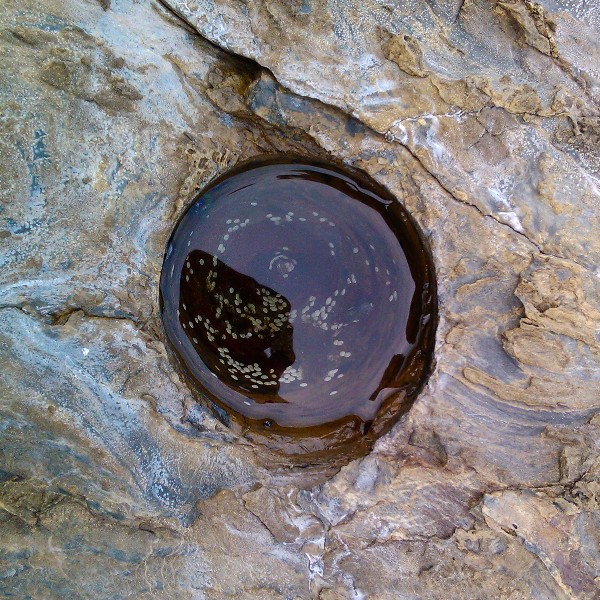
Tide pools at Haruta-Hama

  
  I like to jog down to where the long waves try to drag the island into the sea,
      pretend that this is the edge of the universe.
  But every time I look down,
      trying to dodge mollusks and hermit crabs,
  I am greeted by a myriad of miniture worlds:
      Born when the tide goes out. . .
      Released into the ocean when the tide comes in. . .
      Many the size of a tea cup.